

Dear Reader,
First of all, thank you for your continued support for my public journalism. Substack. Subscriptions have tended to drop off in recent months. Lots of reasons – subscription fatigue (too many subscriptions these days and having to choose), some folk are struggling to make ends meet and even $2.50 a week is too much to spend , and gifted subscriptions coming to an end of their time.
So as I mentioned some time back I am having to make a living by taking on other work, and I recently managed to get funding for a documentary which, for security reasons, I cannot tell you about at the moment and will soon take me overseas for about a month.
I will try to continue writing as much as I can, but posts will probably be shorter and more pointed ( largely because I’m totally fed up with this coalition Government with its politics and economics of selfishness) and there will be a hiatus in interviews after the end of this month.
Today’s short post is an example of what I am likely to be producing over the coming weeks. Thank you for your understanding.
NIMBY NATIONAL
Instead of promoting city sprawl and pouring concrete over some the best arable land in our country (eg. Pukekohe) Housing Minister Chris Bishop wants to see the city grow up instead of out.
His Auckland housing intensification would enable up to around 2 million homes to be accommodated by increasing density, especially in and around the CBD, train stations, public transport corridors and town centres.
Good idea right?
Provided there was some creative architectural thought put into how these multi-story building were designed and considerable well-being planning given to creating community areas, schools and people friendly facilities in the inner city, I’d be all for it.
The trouble is many of the residents of suburbs such as Remuera, Mt Eden and Grey Lynn, don’t want even three storied buildings in their leafy neighourhoods claiming it will destroy the historic character of their suburb -and what they fear most of course is the impact such a plan might have on their property values.
Many residents in these suburbs traditionally vote National.
“If you do this to us” they say “ we will vote either NZ First or ACT” (ACT, of course, being the champions of property rights over the public good.
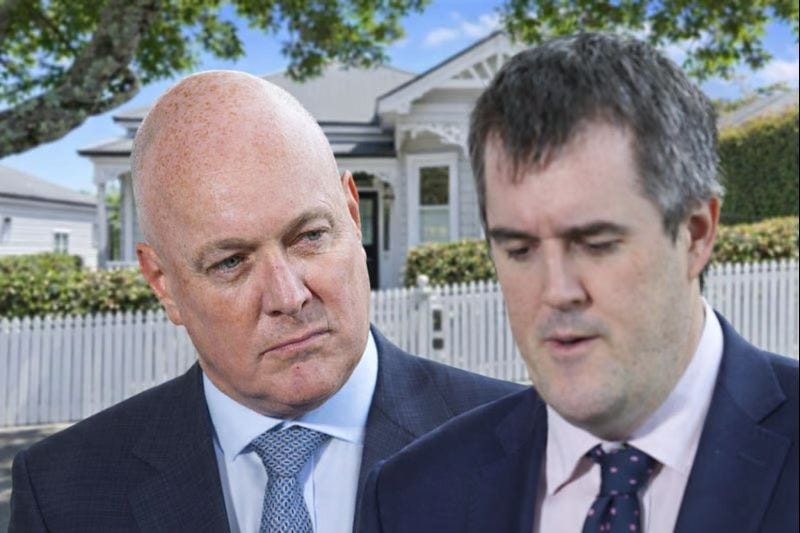
So Luxon is said to be about to water down Bishop’s intensification plan because of a fear of losing votes in election year.
Result?
Another win for the politics of selfishness.
And of course, Luxon puts a potential contender for the job he is struggling to hold on to - in his place.
This post has now been made free thanks to the generosity of my paid subscribers who support my public journalism.
If you are a Free Subscribers please consider upgrading to Paid. I need you help to keep going.
For $10 a month including GST ( less than a cup of coffee a week) you can gain full access to all my paywalled fourth estate articles,documentaries and podcasts, plus you will get to comment in a chatroom of thoughtful Kiwis who care about our country and where it is going, in a troll- free social media environment.
To my paid subscribers, thank you for your ongoing support.. Please consider giving a Subscription to a friend or whanau.
I am concerned too about the 'destruction' of our arable land. I remember as a child the Tip Top factory south of Auckand was surrounded by green fields. I value very much your work and have no intention of letting my subscription lapse. I am also dismayed by the Coalition Government. It is my experience that sharing always brings more. But it is not a formula. The act of sharing brings unknown benefit. Sharing can't be calculated. The benefit is a surprise to be found.
If Auckland gets this concession will other areas across the country get similar concessions .In my opinion the housing crisis starts and ends with National from the time they cut spending on state housing and subsidised private rentals with the payment of the accommodation supplement and turned housing into investment for retirement for "mum and Dad" investors. We need capital gain on rental accommodation. We need too affordable housings and environmental protection when building new housing including visual protection.